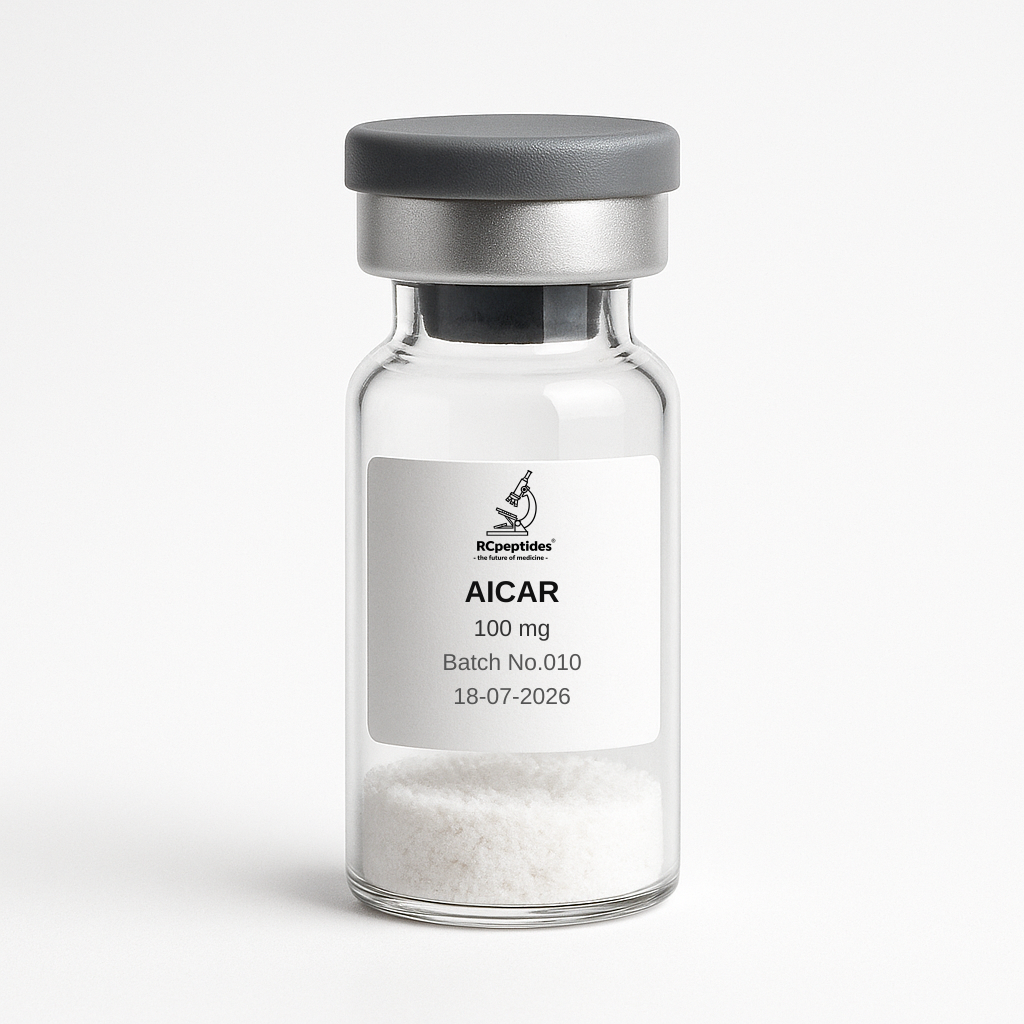
AICAR 100mg
NOT FOR HUMAN CONSUMPTION
AICAR is a synthetic nucleoside analog that is converted intracellularly into ZMP (AICAR monophosphate), an AMP mimetic that activates AMP-activated protein kinase (AMPK)—the master regulator of cellular energy balance.
Originally developed as acadesine for cardiac ischemia protection, AICAR later became widely used in metabolic, exercise physiology, and cancer research.
Regulatory status:
AICAR is investigational and not FDA/EMA-approved for general therapeutic use. It is also banned by WADA due to performance-enhancing potential.
2) Biological rationale
2.1 AMPK: the energy sensor
AMPK is activated when cellular energy is low (high AMP/ATP ratio). Once activated, it:
-
↑ glucose uptake
-
↑ fatty-acid oxidation
-
↓ lipogenesis
-
↓ protein synthesis (via mTOR inhibition)
-
↑ mitochondrial biogenesis
AICAR mimics AMP, artificially activating this pathway even without energy depletion.
3) Molecular mechanism of action
3.1 Intracellular activation
-
AICAR enters cells via nucleoside transporters.
-
Converted to ZMP by adenosine kinase.
-
ZMP binds AMPK γ-subunit → conformational activation.
This produces sustained AMPK signaling similar to exercise or caloric restriction.
3.2 Downstream metabolic pathways
| Pathway | Details |
|---|---|
| GLUT4 translocation | Effect: ↑ glucose uptake Physiological outcome: improved insulin sensitivity |
| ACC inhibition | Effect: ↑ fatty acid oxidation Physiological outcome: fat reduction |
| mTOR inhibition | Effect: ↓ protein synthesis Physiological outcome: anti-growth signal |
| PGC-1α activation | Effect: ↑ mitochondrial biogenesis Physiological outcome: endurance-like adaptation |
| Hepatic gluconeogenesis | Effect: ↓ glucose output Physiological outcome: lower blood glucose |
3.3 Exercise-mimetic biology
In animal studies, AICAR increased endurance capacity by promoting oxidative muscle fiber phenotype, even without exercise—leading to the nickname “exercise mimetic.”
4) Pharmacokinetics
-
Route: IV or intraperitoneal in research settings
-
Bioavailability: limited orally
-
Half-life: short plasma half-life but sustained intracellular effects due to ZMP formation
-
Metabolism: intracellular phosphorylation and nucleotide pathways
Human PK data remain limited because development did not proceed to widespread clinical use.
5) Clinical and preclinical evidence
5.1 Cardiac ischemia (original indication)
Acadesine was studied for reducing perioperative myocardial ischemia during cardiac surgery. Early trials showed signals suggesting improved ischemic tolerance, but results were inconsistent and development was not pursued to approval.
5.2 Metabolic disease models
In animal and early human metabolic studies, AICAR demonstrated:
-
improved insulin sensitivity
-
reduced hepatic glucose output
-
increased skeletal-muscle glucose uptake
-
improved lipid metabolism
These findings positioned AMPK activation as a major therapeutic target (later pursued indirectly via metformin, GLP-1 agonists, etc.).
5.3 Cancer biology
AMPK activation can suppress tumor growth by:
-
inhibiting mTOR signaling
-
inducing metabolic stress in cancer cells
-
altering nucleotide synthesis
However, cancer outcomes depend on tumor type and metabolic context.
5.4 Exercise physiology and doping interest
AICAR attracted attention after mouse studies showed:
-
↑ endurance capacity
-
↑ oxidative muscle fibers
-
↑ mitochondrial function
Because of these findings, AICAR became prohibited in competitive sport.
6) Potential therapeutic applications (investigational)
| Field | Rationale |
|---|---|
| Type 2 diabetes | improves insulin sensitivity |
| Obesity | ↑ fat oxidation |
| NAFLD/MASH | ↓ hepatic lipogenesis |
| Cardiovascular disease | ischemia protection |
| Neurodegeneration | mitochondrial support |
| Cancer | metabolic stress induction |
However, most of these remain preclinical or early-stage.
7) Safety and tolerability
7.1 Known adverse effects (from clinical and preclinical data)
-
Hypoglycemia
-
Hypotension
-
Bradycardia
-
Gastrointestinal symptoms
-
Elevated uric acid
-
Liver enzyme changes
These reflect systemic energy-metabolism shifts.
7.2 Mechanistic safety concerns
-
Chronic AMPK activation may suppress protein synthesis
-
Possible interference with muscle growth
-
Potential cardiometabolic instability if misused
Because AMPK regulates many pathways, long-term safety is complex.
8) Regulatory and legal status
-
Not approved for human therapeutic use.
-
Illegal to market for human consumption in most jurisdictions (including EU/Netherlands).
-
Banned by WADA as a performance-enhancing substance.
AICAR is legally used only in laboratory research with proper authorization.
9) Comparative positioning
| Feature | Details |
|---|---|
| AMPK activation | AICAR: Direct Metformin: Indirect Exercise: Natural |
| Endurance adaptation | AICAR: Strong in animals Metformin: Mild Exercise: Strong |
| Clinical approval | AICAR: No Metformin: Yes Exercise: N/A |
| Safety knowledge | AICAR: Limited Metformin: Extensive Exercise: Excellent |
10) Scientific legacy
AICAR’s importance lies in demonstrating that AMPK activation is a central lever in metabolic health, influencing the development of:
-
metformin mechanistic understanding,
-
exercise-mimetic research,
-
mitochondrial therapeutics,
-
modern metabolic drugs.
For in vitro laboratory research use only. Not for human or veterinary use. Not intended for diagnosis, treatment or prevention of disease.
Price: €75.00
Collection: Peptides
Batch test results and COAs
Research use only. Not for human consumption.