PT-141 10mg vial
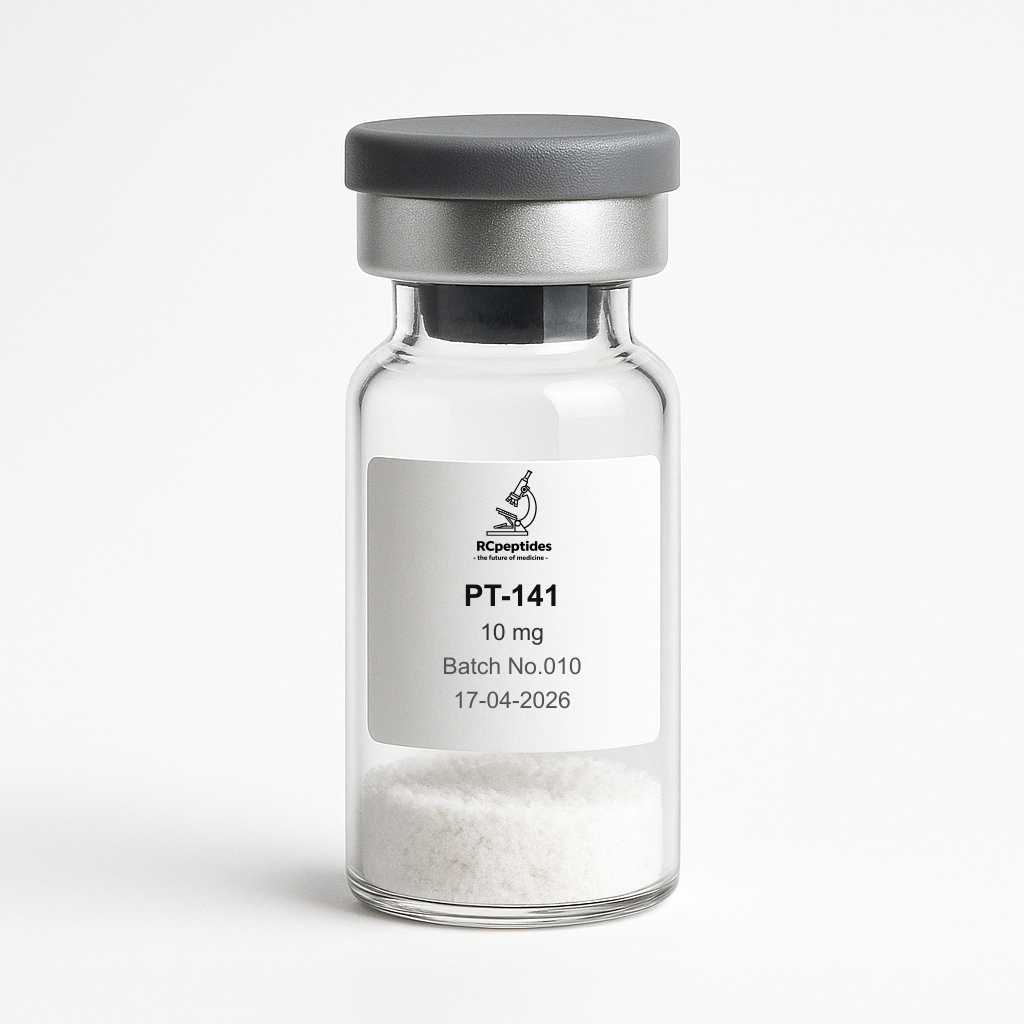
PT-141 10mg vial — PT-141, also known as bremelanotide, is a peptide that acts at melanocortin receptors. It has been investigated in sexual-desire research. The labelled 10mg research vial is distinct from Vyleesi, the regulated bremelanotide medicine with a defined formulation and indication.
1. Compound and product overview
| Detail | Description |
|---|---|
| Compound | Bremelanotide (PT-141) |
| Class / target | Melanocortin receptor agonist peptide |
| Labelled presentation | PT-141 10mg vial |
| Research focus | Melanocortin signalling and sexual-desire research endpoints |
2. Mechanism and biological rationale
Melanocortin signalling differs from the peripheral vascular mechanism of phosphodiesterase-5 inhibitors. That mechanistic distinction does not establish superior efficacy or an ability to overcome every cause of sexual dysfunction. The relationship between receptor activity and a subjective clinical outcome requires controlled study.
The clinical programme evaluated patient-reported desire and associated distress in a specified population. These are different from a general performance-enhancement claim or a guaranteed change in sexual activity. Laboratory receptor studies and clinical questionnaires therefore describe different levels of evidence.
3. Benefits and effects studied
The table describes endpoints investigated in the cited research. The evidence level and study setting matter: findings for a study compound or pharmaceutical formulation do not establish the same outcomes for this catalogue material.
| Research area | Findings and evidence limits |
|---|---|
| Defined clinical endpoints | The two randomized phase 3 RECONNECT trials evaluated bremelanotide in premenopausal women with hypoactive sexual desire disorder. Their results concern the investigational medicinal formulation and selected population. |
| Regulatory context | The current US Vyleesi label covers acquired, generalized HSDD in premenopausal women under specified conditions. It does not indicate the medicine for men, postmenopausal women or enhancement of sexual performance. |
| Tolerability | The medicinal label includes nausea, flushing, headache and injection-site reactions, as well as blood-pressure and pigmentation warnings. These are relevant limitations, not evidence of a risk-free research material. |
| Evidence boundaries | The clinical programme does not validate this catalogue vial as an interchangeable autoinjector or establish broad weight-control, pain-treatment or performance benefits. |
4. Evidence in context
A medicine’s approval belongs to a particular formulation, indication and quality system. It should not be transferred to a research vial because the named active compound is the same. The label’s restrictions also matter: the evidence is not a blanket indication for every type of low desire or sexual dysfunction.
Compare studies using their exact endpoints and participant criteria. Changes in desire or distress do not automatically imply improved vascular function or a particular duration of response. The references below provide the clinical context without turning a product description into an individual-use protocol.
5. Product identity and laboratory considerations
Match the product name and labelled amount to the batch documentation before selecting a material for an experiment. Identity, purity and measured content answer different questions: a purity percentage alone does not establish the amount of the named compound, its biological activity, or the absence of every possible contaminant.
Use the original certificate where available to check the tested batch, analytical method and reported results. A result belongs to the sample and tests described in that report; it should not be extended to a different batch or treated as a clinical evaluation. Storage, solvent compatibility and stability after preparation require the documentation for the actual material and the conditions of the planned assay. A vial size is a product specification, not a treatment schedule.
6. Research scope
This listing supplies a research material. Published clinical studies use defined formulations, eligibility criteria, monitoring and analytical controls that are not established by this product listing. Laboratory observations, biomarkers and clinical outcomes should be interpreted separately. The cited literature provides background for scientific evaluation; it is not evidence that this particular product has been tested for therapeutic efficacy or safety.
Selected scientific references
- Kingsberg et al. — Bremelanotide, two randomized phase 3 RECONNECT trials (2019)
- FDA — Vyleesi prescribing information, revised October 2026
For in vitro laboratory research use only. Not for human or veterinary use. Not intended for diagnosis, treatment or prevention of disease.
Price: €32.50
Collection: Peptides
Batch test results and COAs
Research use only. Not for human consumption.