SS-31 50mg vial
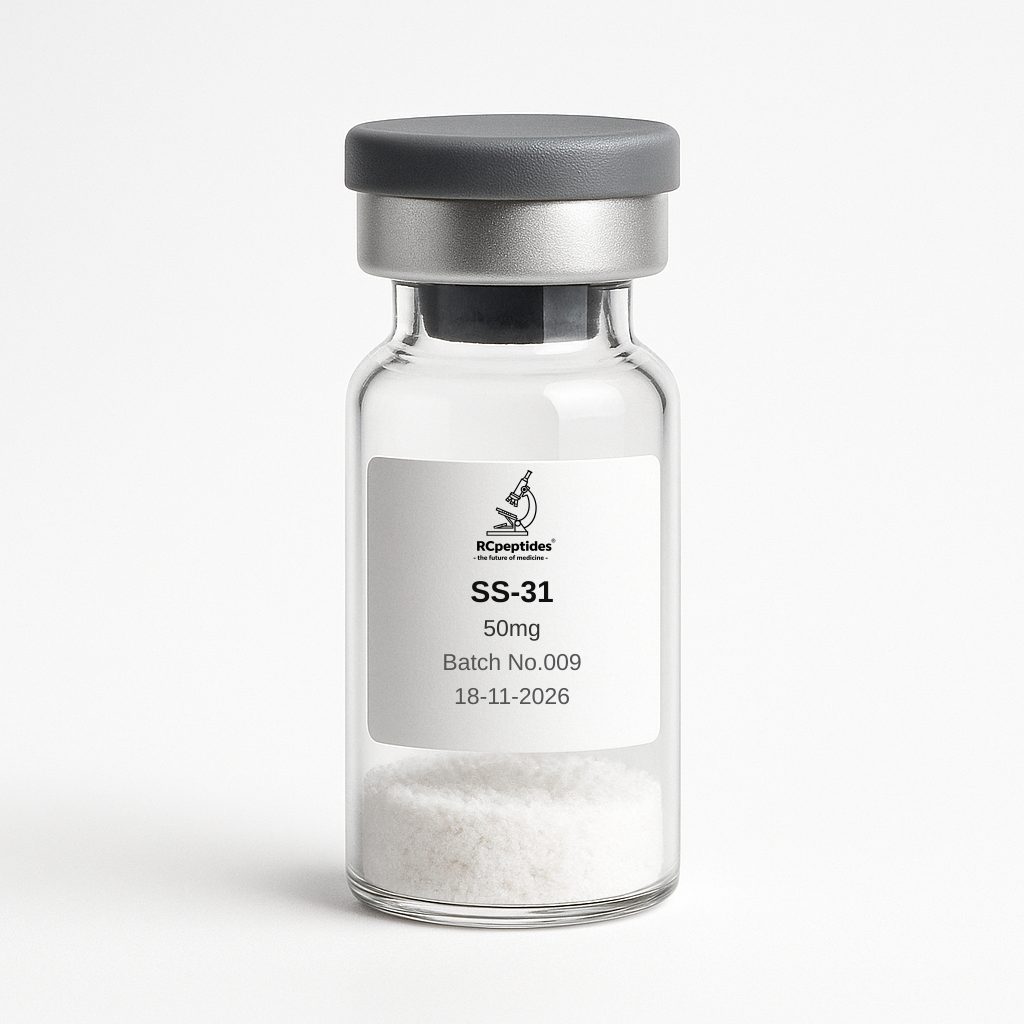
NOT FOR HUMAN CONSUMPTION
SS-31, also known as Elamipretide, is a synthetic tetrapeptide (D-Arg-dimethylTyr-Lys-Phe-NH₂) designed to target and stabilize mitochondrial function. By selectively binding to cardiolipin—a phospholipid unique to the inner mitochondrial membrane—SS-31 aims to preserve mitochondrial integrity, enhance bioenergetics, and mitigate oxidative stress. This mechanism positions SS-31 as a promising therapeutic candidate for a range of conditions associated with mitochondrial dysfunction, including neurodegenerative diseases, cardiovascular disorders, and metabolic syndromes.
2. Mechanism of Action
2.1. Mitochondrial Targeting
SS-31 exhibits high affinity for cardiolipin, facilitating its accumulation within the inner mitochondrial membrane. This localization allows SS-31 to exert its effects directly at the site of electron transport and ATP synthesis.
2.2. Bioenergetic Enhancement
By stabilizing cardiolipin, SS-31 supports the optimal function of the electron transport chain (ETC), leading to improved ATP production and reduced electron leak. This enhancement of mitochondrial efficiency is crucial in tissues with high energy demands.
2.3. Antioxidant Properties
SS-31 possesses intrinsic antioxidant capabilities, scavenging reactive oxygen species (ROS) and reducing oxidative damage to mitochondrial components. This action helps in maintaining mitochondrial integrity and function under stress conditions.
3. Clinical Applications and Efficacy
| Research area | Findings and context |
|---|---|
| 3.1. Cardiovascular Diseases | In preclinical models, SS-31 has demonstrated cardioprotective effects, including improved myocardial function and reduced infarct size following ischemia-reperfusion injury. However, clinical trials have yielded mixed results. For instance, a phase 2 trial in patients with heart failure with reduced ejection fraction did not meet its primary endpoints, though some secondary measures indicated potential benefits. |
| 3.2. Primary Mitochondrial Myopathy (PMM) | SS-31 has been evaluated in patients with PMM, a group of disorders characterized by impaired mitochondrial function.While early-phase studies suggested improvements in exercise tolerance and mitochondrial biomarkers, a larger phase 3 trial failed to achieve its primary efficacy outcomes. |
| 3.3. Age-Related Muscle Decline | In aged animal models, SS-31 treatment has been associated with enhanced mitochondrial function, improved muscle endurance, and reduced oxidative stress. These findings suggest potential applications in mitigating age-related sarcopenia and improving physical performance in the elderly. |
| 3.4. Neurodegenerative Diseases | Preclinical studies have indicated that SS-31 may offer neuroprotective effects by preserving mitochondrial function and reducing oxidative damage in models of neurodegenerative diseases such as Alzheimer's and Parkinson's. However, clinical validation in human subjects remains to be established. |
4. Safety and Tolerability
SS-31 has generally been well-tolerated in clinical studies. The most commonly reported adverse events include:
-
Injection site reactions: Redness, pain, or swelling at the site of administration.
-
Headache and dizziness: Occasionally reported but typically mild in severity.
Safety findings depend on the study and formulation. The approved medicinal label includes hypersensitivity warnings and injection-site reactions. It should be consulted for the authorized medicine; neither that label nor a research-study tolerability finding establishes the safety of this catalogue vial.
5. Pharmacokinetics
-
Administration: Primarily via subcutaneous or intravenous injection.
-
Half-life: Approximately 4 hours in animal models; human pharmacokinetic data are still being elucidated.
-
Tissue Distribution: Rapid uptake into mitochondria-rich tissues, including cardiac and skeletal muscle.
6. Regulatory Status
In September 2025, the US FDA granted accelerated approval to Forzinity (elamipretide) to improve muscle strength in adults and children with Barth syndrome weighing at least 30kg. The approval was based on an intermediate endpoint and is subject to confirmatory evidence requirements. It applies to the authorized medicine and indication, not to this 50mg research vial or to general anti-ageing, neurological or cardiovascular use.
Selected scientific references
- FDA — Accelerated approval of Forzinity for Barth syndrome (2025)
- FDA — Forzinity prescribing information
7. Conclusion
SS-31 represents a novel approach to targeting mitochondrial dysfunction, a central feature in numerous chronic diseases.While preclinical studies have demonstrated promising results across various models, clinical trials have produced mixed outcomes. Further research is necessary to fully understand its therapeutic potential and to identify patient populations that may benefit most from its application.
References:
-
Mitchell, W., et al. (2020). The mitochondria-targeted peptide SS-31 binds lipid bilayers and modulates surface electrostatics as a key component of its mechanism of action. Journal of Biological Chemistry, 295(21), 7452–7469.
-
Karaa, A., et al. (2020). Randomized dose-escalation trial of elamipretide in adults with primary mitochondrial myopathy. Neurology, 94(7), e740–e751.
-
Siegel, M. P., et al. (2013). Mitochondrial-targeted peptide rapidly improves mitochondrial energetics and skeletal muscle performance in aged mice. Aging Cell, 12(5), 763–771.
-
Zhao, K., et al. (2004). Cell-permeable peptide antioxidants targeted to inner mitochondrial membrane inhibit mitochondrial swelling, oxidative cell death, and reperfusion injury. Journal of Biological Chemistry, 279(33), 34682–34690.
For in vitro laboratory research use only. Not for human or veterinary use. Not intended for diagnosis, treatment or prevention of disease.
Price: €127.50
Collection: Peptides
Batch test results and COAs
Research use only. Not for human consumption.